Showing posts with label yin. Show all posts

Thursday, April 6, 2017

YIN YOGA - KIDNEY SERIES for Enhancing the Jing

Yin Series to purify, cleanse and heal the Kidney, Urinary Bladder Meridians

The JING is  our CREATIVE ENERGY. It is one of the three treasures of Taoism which include Jing, Qi and Shen. Although there is no exact translation for Jing, Qi and Shen, they are best translated as Essence, Vitality and Spirit.

The most concentrated or densely-vibrating energy is Jing. Jing is the treasure that is most associated with the physical body. The home of Jing is the Kidney Organ System (the lower Dantien). Jing is considered to be the root of our creative vitality, the physical substance out of which our life unfolds.  When depleted Jing can be restored through diet, supplements, yoga and qigong.

BEGIN SEATED IN JALA MUDRA

LOW CROCODILE (30 sec to 1 minute)
MOVING COBRA (1 minute)
TV WATCHING POSE (2 to 5 minute)
SPHINX W/ Crossed Legs (2 to 5 minutes)
SEAL (2 to 5 minutes)
FLAPPING FISH - COUNTER POSE (1 minute each side)
SADDLE w/ Variations (2 to 5 minutes)
DRAGON and VARIATIONS - High Flying Dragon, Low Dragon, Winged Dragon (2 to 5 minutes each variation)
WINDSHIED WIPER - COUNTER POSE (2 minute each side)
SINGLE LEG BOW - (30 sec to 1 minute each side)
BRIDGE (2 to 5 minutes)
SUPPORTED SHOULDER STAND WITH A BLOCK (2 to 5 minutes)
FISH (2 to 5 minutes)
PAWANMUKTASANA - (2 to 5 minutes)
RECLINING TWIST - (2 to 5 minutes)
KAPALBHATI
JASTIASNA
NADI SHODHANA
BHRAMARI
SAVASANA
YOGA NIDRA

END SEATED IN JALA MUDRA
"With greater fluidity at all levels of my being, I move through life smoothly and easily"

Thursday, March 30, 2017

Body Mind - Yin to Integrate the Split Body

I recently read the book Bodymind by Ken Dychtwald for Yoga Therapy School and was intrigued and impressed.  I have been looking for a book that articulated the types of relationships between mind and body that I have been exploring in my Yin Class for the last couple of years. The chapter that spoke to me the most was Chapter 2 which provided an overview of the major mind body splits.  I was so moved by it that I used it to teach my Yin Class on Saturday.  Here is what I did:

I started with this quote from the book:

"In my attempt to explore the terrain of my own life and being.  I have discovered that my body and my mind are reflections of each other and that the emotions and experiences which have formed my personality have affected the formation and structuring of my muscles and tissue.  As I have become more aware of my own history and the realm of possibilities that it reveals, I have also become to appreciate some of the ways that these body/mind relationships can be discovered, examined and improved up."

I then offered a Prithivi Mudra the mudra of enhancing embodiment


and the Affirmation  "I trust and honor my body"

I gave everyone a copy of this handout that I took for Bodymind with pictures of all the splits on it.


I suggested that students use this class to discover where the imbalances and splits where in their body and where the felt unity and integration.


And then we began the Yin Sequence focusing on Body Splits

FRONT?BACK SPLIT


FRONT/BACK SPLIT - BACK

Start with

BUTTERFLY WARM UPS (flapping, twisting, circling, rowing, metal triangle)

BUTTERFLY POSE LONG HOLD
Butterfly Pose is a Forward Bend that stretches the lower back without requiring loose hamstrings. According to Ken Dychtwald our back is our private and unconscious self.  Unwanted and negative emotions get stored in the back.


 Unfortunately, unwanted emotions don’t disappear a lot of times they get stored in the back.  The back can become weak because it is storing emotions like anger and fear.
Bring awareness to the back and begin to observe any tightness or holding.  Don't try to change anything just notice it.  Being consciously breathing.  On the inhale say to yourself mentally "I am breathing in" or the exhale say to yourself mentally "I am breathing out" . . .


FRONT BACK SPLIT CONTINUED - FRONT

SUPINE BUTTERFLY with two blocks


Supta Baddhakonasana is a pose with many benefits and one of them is a heart opener opening the chest and the whole front of the body,  According to Bodymind the front is the social self and the conscious self.  If the body is likened to a house then the front is like the living room in the house and the back is like the attic or basement.

As you hold this supine butterfly experience what it feels like to have your chest opened and exposed. Does this backbend feel more comfortable than the previous forward bend. How do the front and body differ in your experience today?  Is there a difference you have noticed between the front and the back? Where is the constriction in the body today?  Is it in the front or the back of the body? Is there even any constriction?


TORSO/LIMB SPLIT


ARMS

REVOLVED TABLE/EYE THE NEEDLE POSE


Bring your way to table.  Wrists under shoulders needs under hips and begin working through cat cow. As you inhale arch the back and as you exhale dome the back.  Back the hand behind the neck and shine the heart to the sky several tops with this movement up and down movement.  The extend the arm reach more something you really want and then thread the right arm behind the left for the revolved table pose.


The torso is the core body.  The limbs allow us to reach out and expand ourselves past our self contained restrictions and limits imposed by our torsos.  If we have a Torso Limb Split either our Arms and legs are weak and torso is strong or our torso is weak and arms and legs are strong.
Weak limbs can represent bottled up feelings.  Overdeveloped limbs are a sign of  a person who is doer and a be-er.


TORSO/LIMB SPLIT - 2 to 5 minutes each side

LEGS

DRAGON pose and MANY VARIATIONS


Stretches the back leg's hip flexors and quadriceps


Then we moved on to

HEAD/BODY SPLIT


CROCODILE VARIATIONS


SPHINX long hold - 3 to 5 minutes


The head and face are our most social aspects.  The head and the face are usually not covered where the rest of the body is.  The body below the neck is more private than the body above the neck.  As westerners we see the head as the place for the mind, intellect and reason.  This split represents the split on the mind vs. body, intellect vs. feelings and, reason vs. intuition.


The next split I investigated was the

LEFT/RIGHT SPLIT


BANANASANA - Both Sides  2 to 5 minute hold both sides


The left and right sides of the body, while they may seem extremely similar often mirror different aspects of our characters and personality. The Left is the feminine side and the right is the masculine. We can see quite clearly which shade is more dominant when we see people are expressing themselves: crying, talking with their hands.  We can often have a more flexible or stronger side.

Bananasana or Supta Ardha Chandrasana or Supine half moon stretches the whole side of the body as it works the spine in a lateral flexion (side bend) from the iliotibial (IT) band to the tops of the side rib cage.  It also stretches the oblique stomach muscles and the side intercostal muscles between the ribs


TOP/BOTTOM SPLIT


RECLINING TWIST


The bottom part of the body is stabilizing . moving and balancing.  The top half is seeing, hearing, speaking thinking, expressing, stroking, hitting and holding, communication and breathing
People can have big top and heavy bottom or a big bottom and heavy top.  They can have an underdeveloped bottom and an over developed top or and underdeveloped top and and over developed bottom.  This is seen in pear shape bodies or people with very large shoulders.

ENDING  YOGA NIDRA

I ended class with a Yoga Nidra where at the end of the body scan I used the splits as tools for integration and unity.

I offered "I trust and respect my body" as a sankalpa along with "I will find the write sankalpa for me" or people to use their own personal sankalpa

After I went through the body scan.  I said

Now feel  the right and left side of the body integrated and unified
the top and bottom of the body integrated and unified
the front and the back of the body integrated and unified
the torso, legs and arms integrated and unified
the head and body integrated and unified
and now the whole body together integrated and unified.


After the Yoga Nidra I directed the class to lie on their side and a fetal position, the position of rebirth and renewal together and say something kind mentally to themselves as if they were speaking to a small child or as if an ancestor as talking to them.

After that we pushed up into a comfortable seated position using prithivi mudra and again I re-read part of Ken Dychtwald's quote

"In my attempt to explore the terrain of my own life and being.  I have discovered that my body and my mind are reflections of each other and that the emotions and experiences which have formed my personality have affected the formation and structuring of my muscles and tissue
and then re-offered the affirmation."

"I trust and respect my body."

And then I closed the class Shalom, Salaam, Pace, Peace, Om.

Namaste

Wednesday, August 31, 2016

Yin Practice for Transforming Sadness and Depresstion into Courage, Letting Go and Right Action

Long deep holds such as the ones practiced in Yin Yoga  tap into tension in the hips, chest, and back. Stretching these areas slowly and methodically in a focused yoga class prompt emotional releases. Frustration and anger can manifest in spinal tension, heartbreak and depression can linger in the chest, and emotional pain from the past could lie dormant in the hip flexors.  I have developed this classes to explore yoga poses for emotional and physical healing by working through stiffness and blockages in our bodies.

This yin practice for transforming Depression/Sadness is focused on the 3rd and 4th Chakras (the places in the body sadness and depression are stored according to the Yogic System of Ayurveda) as well as the lungs and large intestines (where sadness and Depression are stored according to Traditional Chinese Medicine). The intention is to stimulate and stretch the places that sadness and depression live in our bodies in order that they can either leave the body or transform into courage, letting go and right action.


CHILD'S POSE


Sadness and Depression are found in the 3rd and 4th Chakras. In Traditional Chinese Medicine they are said to live in the lungs and Large Intestines. The Energy of Sadness is: Soft. Cold to the Touch.

As we get into Child's pose we can ask ourselves, "Why is this pose name child's pose?" The Sanskrit name for the pose is “balasana”, which translate to “child” and “pose” respectively. The pose is called Child's pose because you form the shape of a baby in the womb.  The emphasize is the naturally curved spine like a fetus. In this pose you can feel yourself safe as if you were in the womb. The pose addresses the 3rd chakra as it massages the abdominal organs. The full-body, gravitational pull of Balasana offers great physical, mental and emotional relief.  I find this pose a perfect place to begin as we explore sadness.  Is this pose we are completely protected.


REVOLVED CHILD'S POSE aka PARSVA BALASANA


Sadness is related to neurotransmitters in our brain.  It is also related to an absense of dopamine, serotonin and phenylethylamine.


Revolved Child's Pose is one of the least exposed twists.  Here you can twist without exposing the heart.

"In twists you work with the spine and the action of ‘lengthening’ is to create space between the vertebrae. When there's a lack of space our spine tends to slump or get stuck and our energy levels drop. Through twisting we lengthen the spine and get space between the bones. Then our energy can flow better. Twists give us an instant energy lift and decompress the vertebrae in a safe healthy way."
-


MELTING HEART POSE aka ANAHATASANA


We usually translate the word Karuna as compassion but it originaly means sadness.  It is the sadness we feel when we need to let go of attachments. It is the most important to have compassion for ourselves.Embracing a sad person with love can work miracles on their mental state.  Also surrounding them with beauty and art.

Anahatasana is a beautiful heart-opening yoga pose that energizes the whole body. The name is derived from the Sanskrit, anahata, which means heart. Anahatasana improves posture, expands the chest, supports heart and lung function and promotes circulation. Melting heart also promotes the "let go" attitude, develops compassion, promotes harmony, elevates the mood and helps to achieve a sense of inner calm. Anahatasana stimulates the anahata chakra. A balanced anahata chakra promotes one's mind to a higher state where selfless love reigns supreme.

FROG/TADPOLE

Sadness is related to the water element.  It is seen in our tears.  The moon influences the water element. The descending moon cycle is related to sadness.  The ascending moon cycle is related to Joy and Excitement

Let's go into a metaphorical water as we practice frog pose."Like a frog, this pose invites deep breathing and expansion of the lungs. Purposeful breath work in this asana helps relieve headaches, stress, and mild depressive symptoms.

In addition, focus on the exhale helps remove toxins in the lungs, decrease the heart rate, and release stress induced anxiety.Mandukasana also stimulates the pancreas which improves secretion of insulin. It has been linked to treatment of constipation, diabetes, and digestive disorders as well as improvement in sciatica for some people because the knee and ankle joints are stretched, and the shoulder and abdomen muscles are strengthened.

It reduces belly fat by firing the core and fueling the inner flame. Lastly, it helps reduce menstrual cramps (fun fact: the uterus is the strongest muscle in the body)."
.
BUTTERFLY


There is a practice called Karuna Sadhana.  Mastering  Karuna means changing sadness to compassion.  Most people are so self-absorbed the do not understand that others problems are the same as their own.

The butterfly is the symbol of transformation as it was once a caterpillar that inched and crawled and now has turned into a butterfly that has wings.

DRAGONFLY


Healing Sound of Transformation of Sadness into Courage is:
ssssssssssssssssssss

Close your eyes and put your hands on your rib cage.  Inhale slowly through your nose. Notice in you feel any sadnes, depression, constriction or other physical imbalances in your lungs.  If you do ask them if they have a message dor you.

1. Become aware of your lungs. Take a deep breath and, letting your eyes follow, raise the arms up in front of you. When the hands are at eye level, begin to rotate the palms and bring them up above the head. Keep the elbows rounded. You should feel a stretch that extends from the heels of the palms, along the forearms, over the elbows, along the upper arms and into the shoulders. The lungs and chest will feel open and breathing will be easier. Draw the corners of the mouth back, exhale, making the sound "Ssssssss", sub-vocally, slowly and evenly in one breath.

2. As you exhale, empty all feelings of sadness, sorrow and grief from your lungs.

3. When you have exhaled completely (without straining), rotate the palms down, close the eyes, and breathe in to the lungs to strengthen them. If you are color oriented, imagine a pure white light and quality of righteousness entering into your lungs. Float the arms down by gently lowering the shoulders. Slowly lower them to your lap so that they rest there, palms up. 

4. Close the eyes, breathe normally, smile down to the lungs, be aware of the lungs, and imagine that you are still making the sound. Pay attention to any sensations you may feel. Try to feel the exchange of cool, fresh energy replacing hot, dark waste energy.

5. Repeat the sequence 3 to 6 times. 


SPHINX to SEAL


Traditional texts say that Bhujangasana increases body heat, destroys disease, and awakens Kundalini. It also Strengthens the spine, Stretches chest and lungs, shoulders, and abdomen
Firms the buttocks, Stimulates abdominal organs and Helps relieve stress
Traditional times of great sadness can be adolescence and middle age.  Also we can have a mid-life crisis.  We can be very sad after a death of a loved one. Sadness is a natural response to loss.

SHOELACE POSE - COW FACE WITH EAGLE ARMS


Concentrating on Love, Joy and Humur are powerful ways to release and remove sadness


SWAN - Sitting Swan - Sleeping Swan and Swan Twist


The deity of sadness is Varuna the lord of the water. He is the keeper of the laws of dharma and his palace is a Submerged Mountain.

Here’s the Varuna Gayatri:

Aum Jalbimbaye Vvidmahe
Nila Purushaye Dhimahi
Tanno Varunah Prachodayat

Translation:

Om, Let us meditate on the reflection of water
O person of ocean blue, give me higher intellect
And let the God of water illuminate my mind


FISH


Painful emotions tell us what's our of balance.  

Benefits of Fish Pose. Fish Pose stretches the front of the body, particularly the throat, chest, abdomen, hip flexors, and intercostals (the muscles between your ribs). It strengthens the upper back muscles and the back of the neck, which improves spinal flexibility and posture.Stimulates the anahata chakra (heart psychic center). Brings more prana to the neck and shoulders
Mental Benefits are to Helps to regulate emotions and stress

SUPINE BUTTERFLY


Lungs allow oxygen to function.  Large Intenstines receive waste and food materials from stomache and small intestines.
Supta Baddha Konasana opens the whole front of the body: pelvis, belly, chest, and throat. It is especially beneficial for the pelvic organs. In this pose, the legs are supported. The inner groins can soften and the lower belly and pelvic area can soften. This pose calms the nervous system.


BRIDGE


Too much sadness can lead to things like colon cancer, colds flu, skin problems, asthma, ephysema, lung cancer


Helps alleviate stress and mild depression.
Calms the brain and central nervous system.
Stimulates the lungs, thyroid glands, and abdominal organs.
Improves digestion.

SPINAL TWIST


Fall is the Season of the Lung. Fall fruits are wonderful to eat for sadness relieve as well as green leafy vegetables. The element of sadness is metal.

SAVASANA with Yoga Nidra

Wednesday, August 26, 2015

Chakra Series - Yin Yoga for the Throat Chakra - Vishuddhi

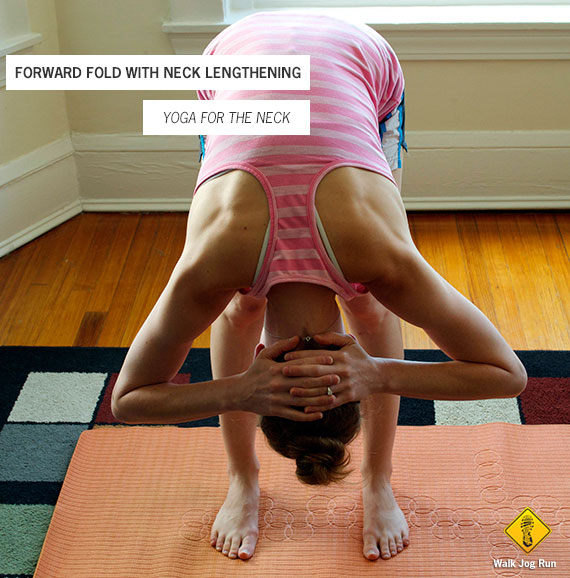
STANDING FORWARD FOLD HANDS BEHIND THE NECK
The sanskrit name for the throat chakra is Vishuddha. “Visuddha/Visuddhi” is derived from the sanskrit word “shuddhi” which means to purify. The throat chakra is related to purification, communication and self-expression.


Breathwork: Ujjayi

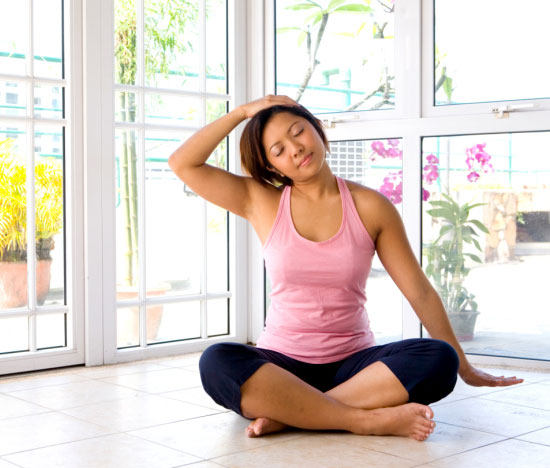
Neck Release - PART 1 - No hands
 It is where we communicate our truth to the world.  Here we give our voice, music or sound and also hear what the world has to reply.  This chakra opens us to higher wisdom and is considered to be the center of dreams.


PART TWO - With Hands
The physical location of the chakra is at the throat.  The related organs are the laryngeal nerve plexus, vocal cords, mouth, throat, ears, thyroid and parathyroid glands.

Benefits: All the nerves connecting the different organs and limbs of the body pass through the neck. Therefore, the muscles of the neck and shoulders accumulate tension, especially after prolonged work at desk.  These asans release tension, heaviness and stiffness in the head, neck and shoulder region.

Contra-indications: These neck moves should not be performed by elderly people and those uffering from low blood pressure, high blood pressure, vertigo or extremem cervical spondylosis.  Expert advice should be sought for any of these problems.  Cervical spondylosis patients should strictly avoid forward bending of the neck.


Forward Bend Sitting on the heels
 According to Hindu tradition, this chakra is described as having a "white color" with sixteen "purple" or "smoke-colored petals". Within the symbol is a sky-blue downward pointing triangle containing a circular white region like the full moon. This represents the element of akashi or "aether".  Downward triangle is the sacred feminine or the yoni. The moon encompasses psychic energy, clairvoyance and communication without words
Benefits: Stretches and strengthens the back muscles and separated the individual vertebrae from each other, releasing pressures on the discs. Often nerve connections emantating from the spinal cord are squeezed by these discs, gicing rise to various forms of backaches.  It regulates the functioning of the adrenal glands, tones the pelvic meuscles and the sciatic nerves and is benefical for both the male and female reproductive organs.Regular practice relieves constipation.

Contraindications: Not be performed by people with very high blood pressure, slipped disc or those who suffer for vertigo.

Breathwork: Count down from 16 as a group

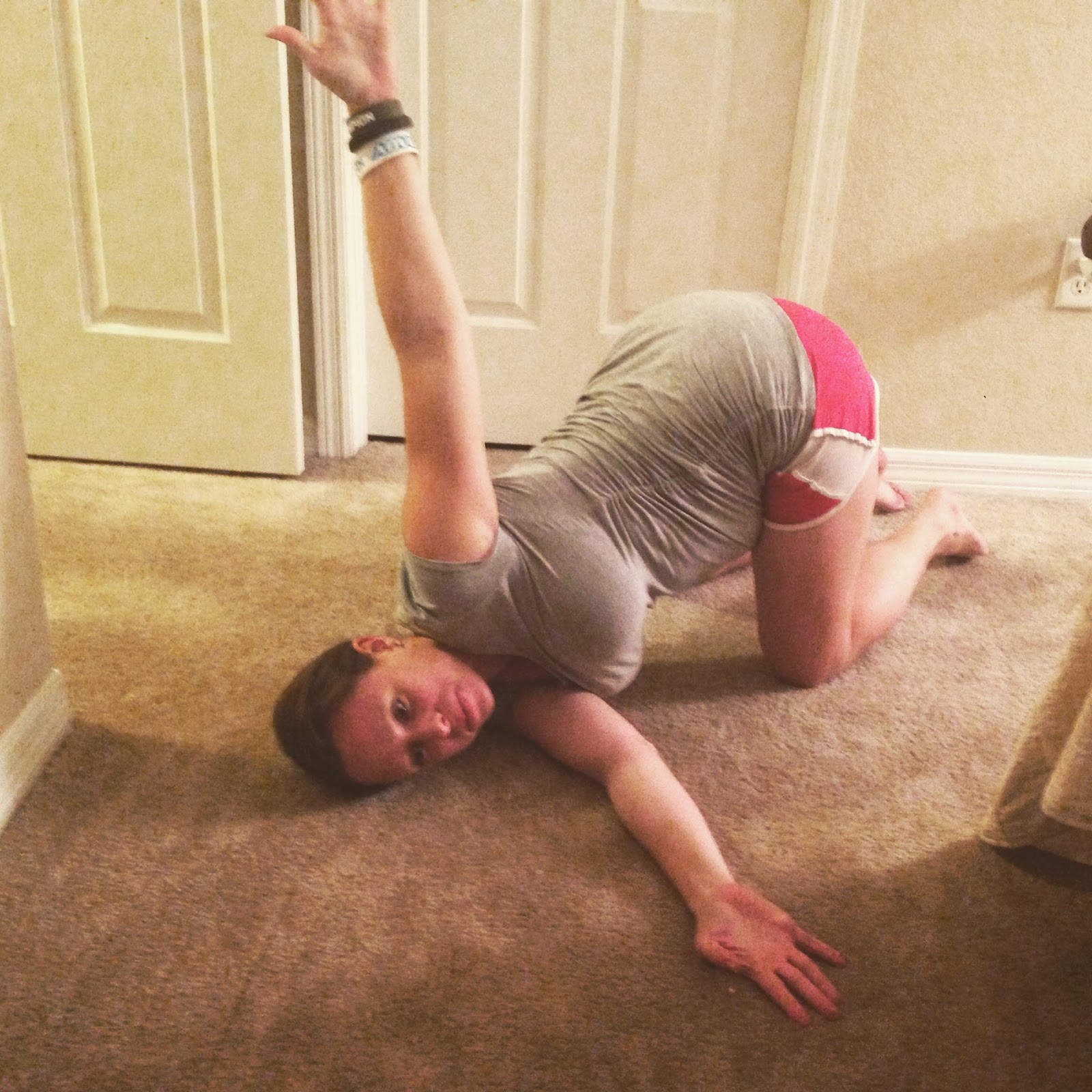
Thread the Needle - Twisting Child's Pose
The bija mantra (seed sound) is the syllable हं haṃ, and is written in white upon the chakra.

Benefits: Gently compresses the muscles of your upper chest. Opens the upper and outer muscles of your shoulder.. Detoxifies and calms your body with the slight twist. Sends fresh blood to your upper extremities.

Contraindications: Avoid if you have any serious shoulder or neck injuries. Anyone with back or hip conditions should take care not to overdo the twist

Symbolism: Turning to the archetypal meaning of the thread, it symbolizes the agent that links all states of being to one another. Threading a needle is the symbol of passing through the center, the target, the gateway.  Also mending something as opposed to throwing it out 

Breathwork: Inhaling and Exhaling Ham

Upward Plank
A ruling deity of the chakra is Sadashiva, who has 5 faces and 10 arms.   He holds a trident, chisel, sword, vajra, fire, a great snake, a bell, a goad, and a noose, and is makes the gesture of dispelling fear. He is clad in a tiger skin. The right half of his body is a white Shiva, and the left half of the body is a golden Shakti. Reminding us to blend the masculine and feminine within us.  Softness in strength and strength in softness. In yoga, flexibility and power together.


Benefits: Strengthens the shoulders, thighs and wrists, and tones the lumbar region of the spine and the Achilles tendons.

Symbolism: To see a wooden plank indicates something that is in need of repair or that you need to maximize your resources and make something out of seemingly nothing.

Breathwork: Ujjayi

Flapping Fish
The ruling goddess is Sakini Shakti who  represents mastery over the elements and the psychic realm. She is shining white, seated on a red lotus, and with five faces, three eyes each, and four-armed, with a bow and arrow, noose, and goad.
Benefits: Stretches the spine, shoulders, and hips. Massages the abdominal organs. Relieves lower backache, neck pain, and sciatica. Helps relieve stress. Improves digestion. Especially good in the second trimester of pregnancy for strengthening the lower back. Therapeutic for carpal tunnel syndrome

Visualization: Visualize a candle flame. Now visualize that flame  in your solar plexus down to your navel and up again through the trunk of your body.

Symbolism: A last burst of energy before you give up


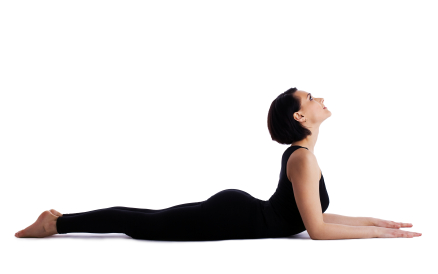
Cobra
The element associated with the chakra is ether which is represented in the full moon in the yantra. According to ancient and medieval science, aether (Greek: αἰθήρ aithēr), also spelled æther or ether, also called quintessence, is the material that fills the region of the universe above the terrestrial sphere.


Benefits: Improves and deepens breathing.  Helps remove backaches and keeps the spine supple.  Tones ovaries and uterus and helps with menstrual and other gynecological disorders.  Stimulates the appetite, alleviates constipation and is beneficial for the abdominal organs, especially the liver and the kidneys

Contra-indications: People suffering from peptic ulcer, hernia, intestinal tuberculosis or hyperthyroidism should not practice this asana with guidance.


Symbolismi: In India, both Hindus and Buddhists have special reverence for the cobra. Hindus believe in the immortality of the snake due to the shedding of its skin, and a snake eating its tail is a Hindu symbol of eternity. It also may represent the sacred feminine, protectiveness, intuitiveness, wisdom, strength, unpredictability, a defensive nature or even evil. 

Sphinx/Seal Pose
Meditation upon this chakra is said to bring about the following siddhis or occult powers: vision of the three periods, past, present and future; freedom from disease and old age; destruction of dangers; and the ability to move the three worlds
Benefits:  Deep compression and stimulation of sacral lumbar arch. Stimulates the door of lide. Tones the spine. In Seal stomache gets a great stretch.

Contra-indications: Bad back or tight sacrum problems. Pregnant use bolsters and don't put belly on floor

Breathwork: Ujjayi


Symbolism:Sphinx - Power, Watching Over. Seal - Being Comfortable in your own skin


Camel
In its most abstract form, the throat chakra is associated with higher discrimination, and is associated with creativity and self-expression.


Benefits: Deeply arches the sacral/lumbar spine and opens the top of the things.  Opens the ankles.  Stretches hip flexors and opens the shoulders.  Great for dropping shoulder or hunched backs

Contra-indications:  Those with weak backs should do gentle variation.  If you have neck issues don't drop the head back keep chin to chest.

Symbolism:Endurance.Transport. Protection. Survival. Conservation. Journeying. Stamina.

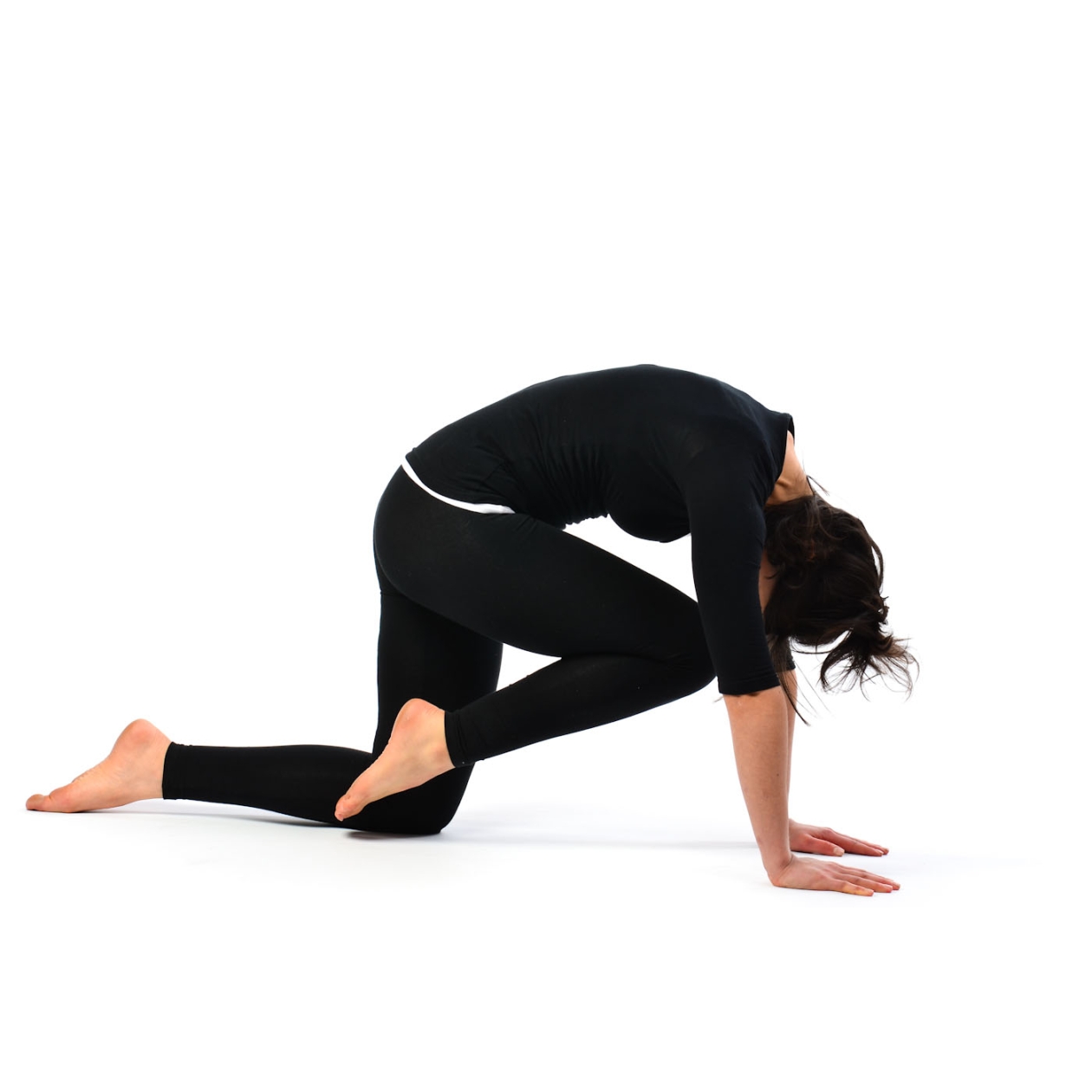
Cat Cow on Hands and Knees


Tiger Pose
Vishuddha is often associated with the thyroid gland in the human endocrine system. This gland is in the neck, and produces hormones essential for growth and maturation. Excessive stress, namely fear and fear from speaking out, affect the throat chakra and thyroid problems may occur.
Symbolism: The tiger puts a special emphasis on raw feelings and emotions. The tiger symbolizes primal instincts, unpredictability, and ability to trust yourself. By affinity with the tiger  , you may enjoy dealing with life matters spontaneously, trusting your intuition and acting fast when needed.

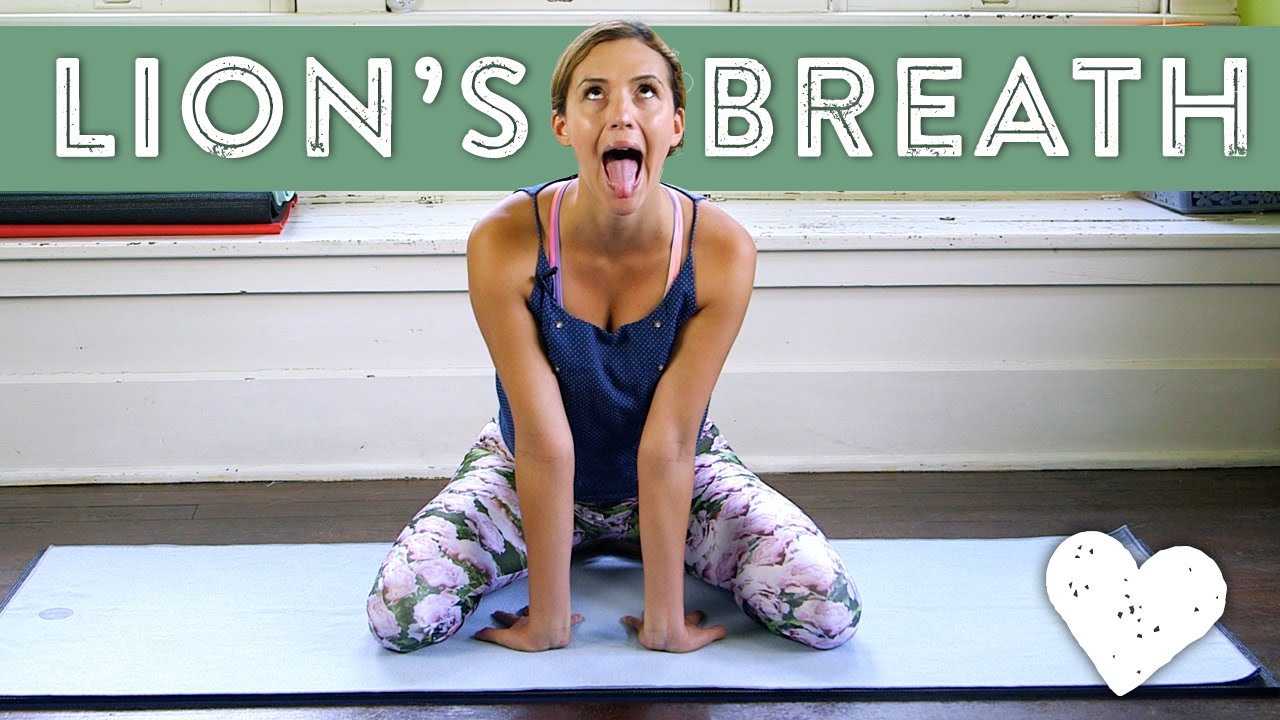
Lion w/ Lions Breath
Although this chakra is located in the neck and the throat it is also associated with hearing, it is also related to the ears, and due to its association with speaking, it is also associated with the mouth. 


Benefits: It relieves frustration and releases emotional tension.  Tension is removed from the chest and diaphragm.  Useful for people who stutter or who are nervous and introverted.  It develops a strong and a beautiful voice.

Symbolism: The symbolic meaning of lions primarily deals with strength. The lion brings a message of balance and sound judgment. The lion shares the world of both night and day, the lion bears a message of prudence to us. In other words, the lion asks us to not overdo in certain areas of our lives. Rather, keep an even mind and an overall balance in our life activities.

Breathwork: Lion's Breath

Knees-Chest and Chin
The success and failure in one's life depend upon the state of this chakra (whether it is polluted or clean).

Rabbit Pose
It is believed that when Vishuddha is closed, we undergo decay and death. When it is open, negative experiences are transformed into wisdom and learning. 


Breathwork: Ujjayi

Symbolism: Symbolic rabbit meanings deal primarily with abundance, comfort, and vulnerability. Traditionally, rabbits are associated with fertility, sentiment, desire, and procreation. Rabbit meanings are also closely linked to the seasons, the changes of Mother Earth, and specifically Springtime. 

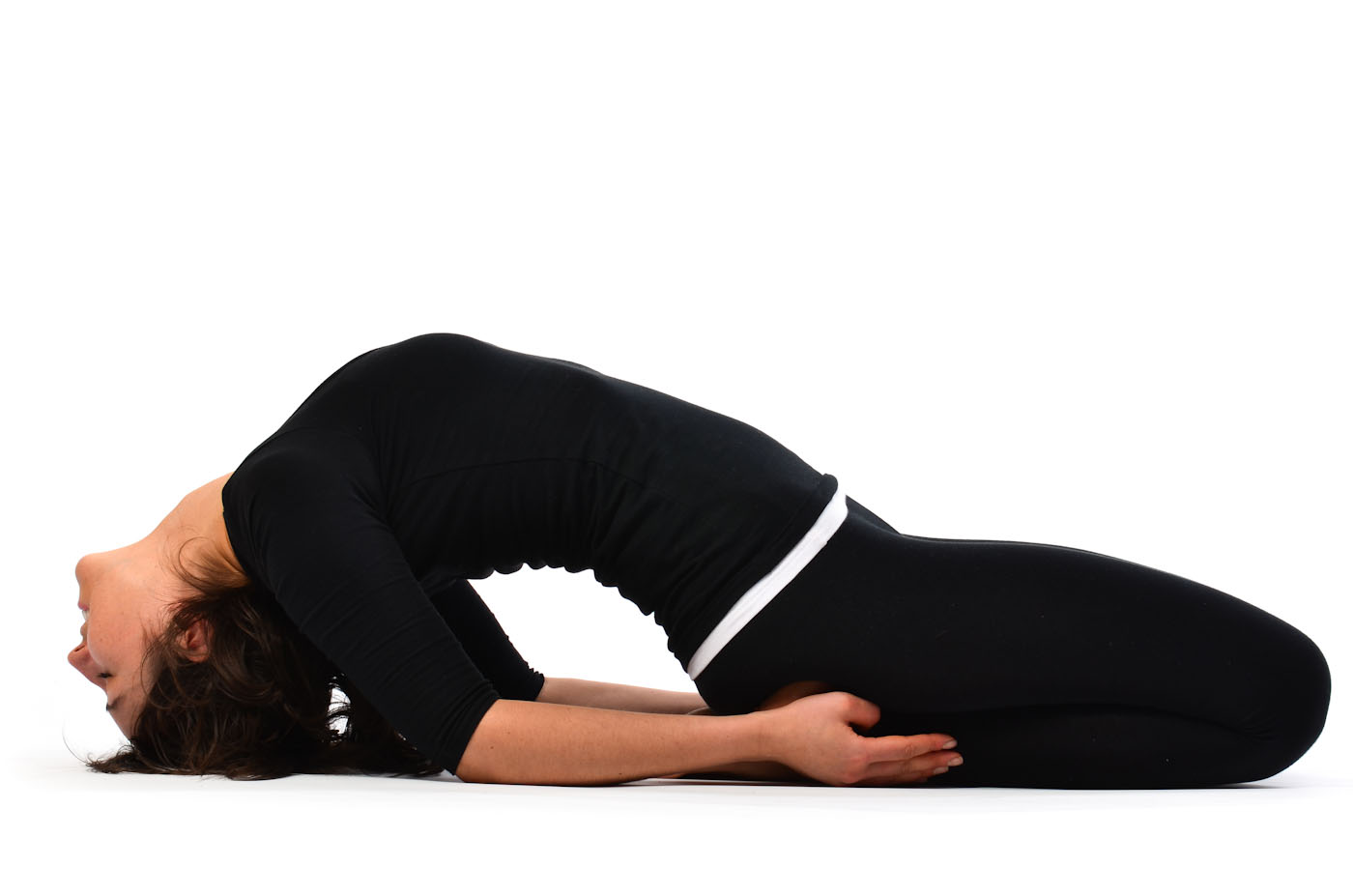
Fish
Guilty feelings are the most prominent reason for this chakra to block the Kundalini energy moving upwards


Benefits:A traditional text that Matsyasana is the “destroyer of all diseases.Stretches the deep hip flexors (psoas) and the muscles (intercostals) between the ribs. Stretches and stimulates the muscles of the belly and front of the neck. Stretches and stimulates the organs of the belly and throat. Strengthens the muscles of the upper back and back of the neck. Improves posture.  

Contra-indications: High or low blood pressure. Migraine. Insomnia. Serious lower-back or neck injury

Symbolism: Fertility. Eternity. Happiness. Knowledge. Transformation

Breathwork: Breathe green. With each inhale imagine your heart center—and possibly the rest of your body—filling up with a soft, green light and with every exhale feel your heart center purge pent-up negativity. Don’t be too forceful on your exhalations. Rather, focus more energy on your positive, “green” inhalation

Sleeping Thunderbolt 
Singing is a great way of stimulating the throat chakra in a beneficial and harmless way, whereas rubbing or hitting the throat area is not and can be harmful.
Benefits: Massages the abdominal organs, alleviates disgestive complaints and constipation. It tones the spinal nerves, makes the back more flexible and realigns rounded shoulders.

Contraindications: Should not be practiced by people suffering from neck problems, sciatica, slipped disc, sacral ailments or knee complaints,

Breathwork: Ujjayi

Symbolism: A thunderbolt or lightning bolt is a symbolic representation of lightning when accompanied by a loud thunderclap. In ancient Hellenic and Roman religious traditions, the thunderbolt represents Zeus or Jupiter (etymologically 'Sky Father'), thence the origin and ordaining pattern of the universe, as expressed in Heraclitus' fragment describing "the Thunderbolt that steers the course of all things".

1/2 Shoulderstand
The element of sound is an integral part of the throat chakra. Sound is a rhythmic vibration of air molecules as they are impacted by matter in movement. All sound is a vibration, and all things, living and nonliving, have a unique vibration. At this level, we do not see the world as individual things or their activities but as a complex interwoven net of energies with characteristic vibrational rhythms.

Benefits: Helps those with low blood pressure. Balances the nervous susrem, strengthens the neck muscles and brings a rich supply of blood to the brain.

Contra-indications: People with high blood pressure, heart conditions, ear inflammations, weak eyecapillaries, problems with thyroid or pituitary glands.

Supported Bridge

Communication is the activity and function of the fifth chakra. Here we have language, a complex pattern of sound and rhythm, through which we symbolize the physical world around us. Through symbol, we have a more efficient way of dealing with the world. I can describe my car, but I can’t bring it into the room with me. I can call New York without actually going there. Our minds work with symbols. We think in words, as well as image and sensory memory. The world of the upper chakras is symbolic of the world below.

Communication involves both listening and speaking. If one’s fifth chakra is closed down, then there is fear of expressing oneself, fear of speaking one’s truth, or excessive shyness. The voice itself is timid and the words are few. If the chakra is too open, we are so busy expressing that we forget to listen, or our voice is dissonant, and we are unable to enter into resonance with those around us.

Symbolism: In the tarot, the bridge card means progress, connections, and stability. Often people view bridges as the only way to reach a destination, and therefore bridges are a way to overcome obstacles. Bridges also represent transitions. “Crossing over” is a euphemism for taking that journey from life to death. 

Snail

Ideally, the fifth chakra should be connected to the self—to all the other chakras above and below—to visions of the mind and the feelings from body with equal ease. 
Chanting is an activity that increases the overall resonance of our being, allowing all our internal systems to enter into a rhythmic harmony. When chanting is practiced as a group activity, it enhances resonance and communication with the group as a whole.
 
Benefits: Stretches the pelivs, regulates the kidneys, acitvates the intenstines and removes excess weight.
Contra-indications; Not recommended for people who are infirmed, suffering from hernia, sciatica or slipped discs

Symbolism: Snails symbolize many deep and powerful things that most of us might not realize. These little crawlers are more in-depth than ever imagined. Keep in mind that not only are there land snails, but there are also sea snails so in this regard this species bridges the gap between elements. And any animal that bridges the gap between two elements bridges the gap between the mundane and the spiritual worlds.

Legs Up the Wall
The fifth chakra is also a center of creativity, another form of symbolic communication. As we open up this center, we open up our creative potential. The greater our resonance within, the greater the power within our creations.


Benefits; It reduces edema in the legs and feet.It relieves tired leg muscles.It gives you all the benefits of inversion, without the effort.It is super calming for the nervous system. It helps quiet the mind.

Breathwork: Ujjayi

SUPTA PAWANMUKTASANA - both sides and then both legs together
As children we sometimes receive the message "children should be seen and not heard.” This can be very detrimental to the growth and development of the throat chakra.

Here are a  number of core emotional, health and life survival issues related to the throat chakra:

Throat Cancer
Thyroid issues: metabolism challenges and weight issues
Parathyroid Challenges such as osteoporosis and osteopenia
Ear, Nose and Throat Issues (small children are notorious for having ear infections, runny noses and sore throats...perhaps it is because they are living in an adult world where they are not able to sufficiently express themselves)
Stiff neck and Shoulders
Speaking untruths, and creatively being deceitful without lying
Lack of Integrity
Becoming cunning
Frustration with inadequate communication
Shyness and lack of courage to speak your truth
Speaking too bluntly
Breathwork: Ujjayi
Final Spinal
When properly nurtured in our youth, and when surrounded by secure and balanced parents or caregivers, we learn to creatively express our desires and communicate with the world in harmonious and empowering ways.

In a balanced state, the fifth chakra will manifest as follows:

Ability to speak and voice the Truth
Being a good listener, and likewise, others will listen to you as an authoritative voice and a respected leader
The subtle ability to hear beneath the words, all of what is being spoken and unspoken.
Being an inspirational communicator and speaker


Breathwork:  Ujjayi

SAVASANA

Breathwork: Quiet Breath